
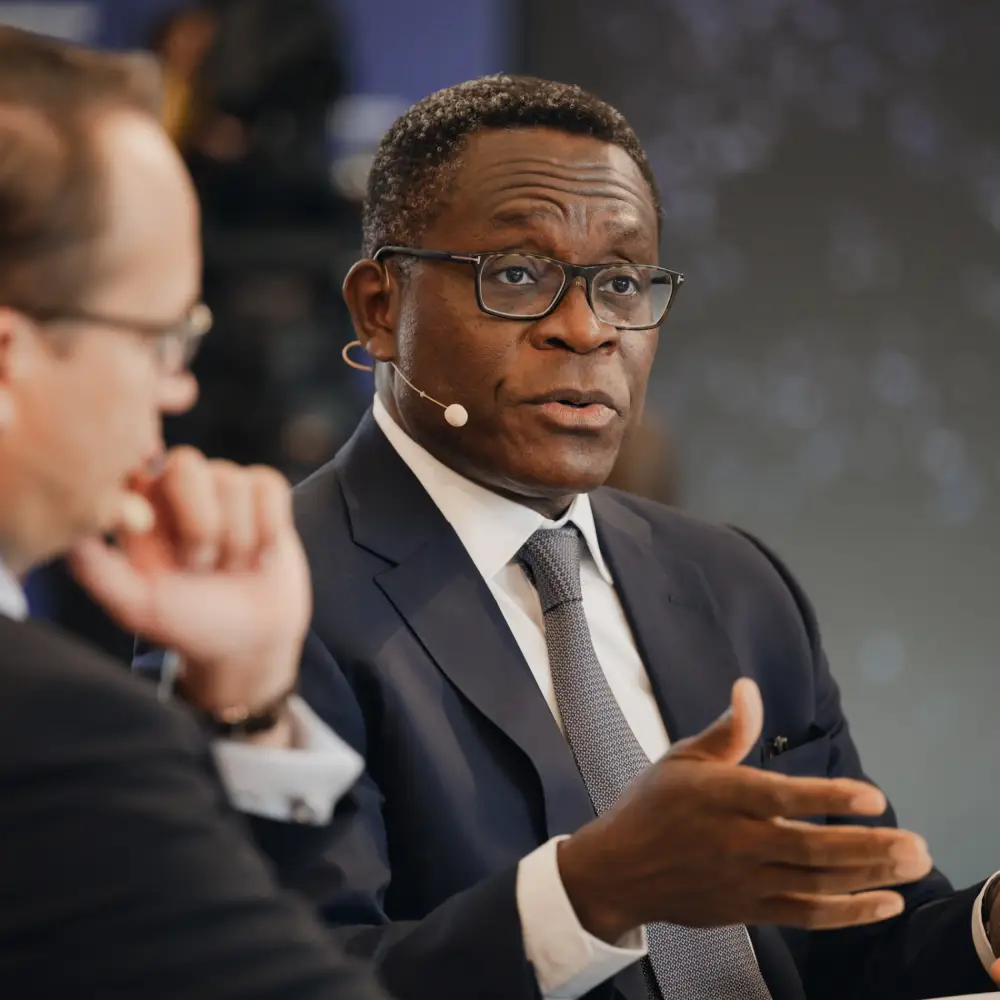
How will technological advances shape 2026? Bernard Mensah, President of International for Bank of America, shares his thoughts on the year ahead.
As 2026 unfolds, the most significant technological shift will not be defined by a single breakthrough, but by the transition of artificial intelligence from experimentation to global infrastructure - becoming a foundational operating system for the world economy.
At Bank of America, this evolution is already visible at scale. Over the past decade, we have invested more than $100 billion in technology, and spend $13–14 billion annually, including around $4 billion each year on new initiatives around AI, data, digital banking, cybersecurity and resilience. More than 18,000 developers across the firm are already using AI-enabled tools to improve efficiency and accuracy, while our platform processes over $450 trillion in payments value annually.
In 2026, AI enters a new phase of maturity. The focus shifts from tools that assist individuals to agentic systems capable of planning, executing, verifying and iterating complex tasks. This will reshape how organisations make decisions, manage risk and operate in real time - not incrementally, but structurally.
At the same time, the broader ecosystem is accelerating: advances in computing power, semiconductors and memory; the expansion of AI-enabled devices into everyday use; and a growing emphasis on governance, transparency and verification as intelligent systems become embedded in critical infrastructure.
Therefore, leadership in 2026 will not be defined by who adopts technology fastest, but by who applies it most responsibly. The organisations that succeed will be those that combine ambition with discipline - and innovation with the trust needed to sustain it at global scale."




 Share on X
 Share on LinkedIn