
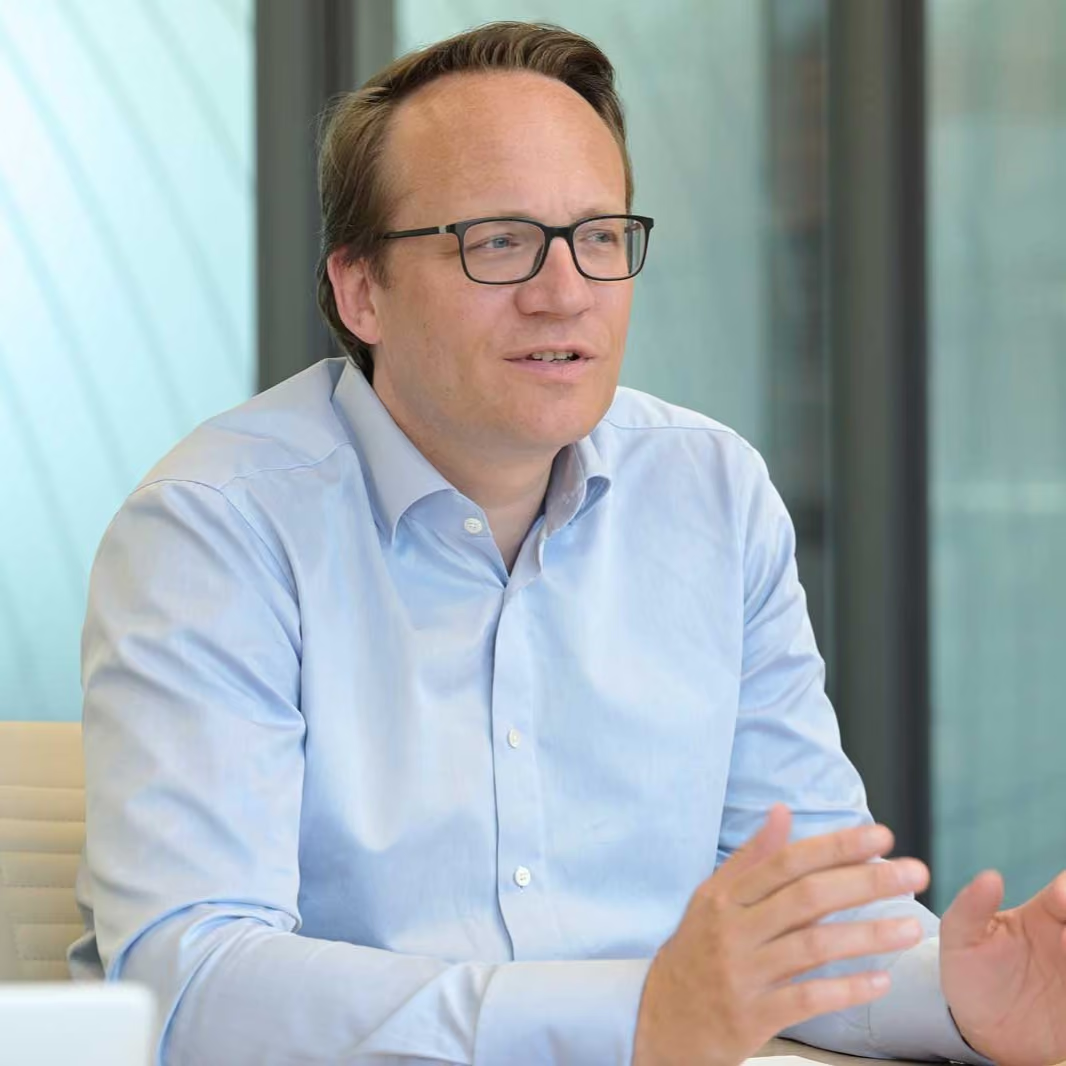
How will technological advances shape 2026? Markus Krebber, Chief Executive Officer of RWE, shares his thoughts on the year ahead.
The defining technological change of 2026 is less about novelties and more about scale. Digital technologies, automation, and machine learning are increasingly embedded in the core of economies, and innovation is moving from project-scale experimentation toward global, system-level execution.
Artificial intelligence is central to this shift, not only because of what it can do, but also because of what it requires. As AI scales, it redefines demand, concentrates investment, and exposes electricity as a strategic bottleneck. In parallel, electrification is expanding across transport, buildings, and industry, pulling entire sectors onto a shared foundation: reliable electricity.
Together, these forces are reshaping priorities. Electricity systems, grids, and generation capacity become instruments of competitiveness. The ability to execute from planning and permitting through delivery will be decisive.
The question is no longer whether these transitions will happen, but how fast they can be realised. Technological leadership now depends on system integration, speed, and the ability to align digital intelligence with physical infrastructure at scale. Above all, it will come down to how effectively we translate AI’s potential into societal and economic value.




 Share on X
 Share on LinkedIn